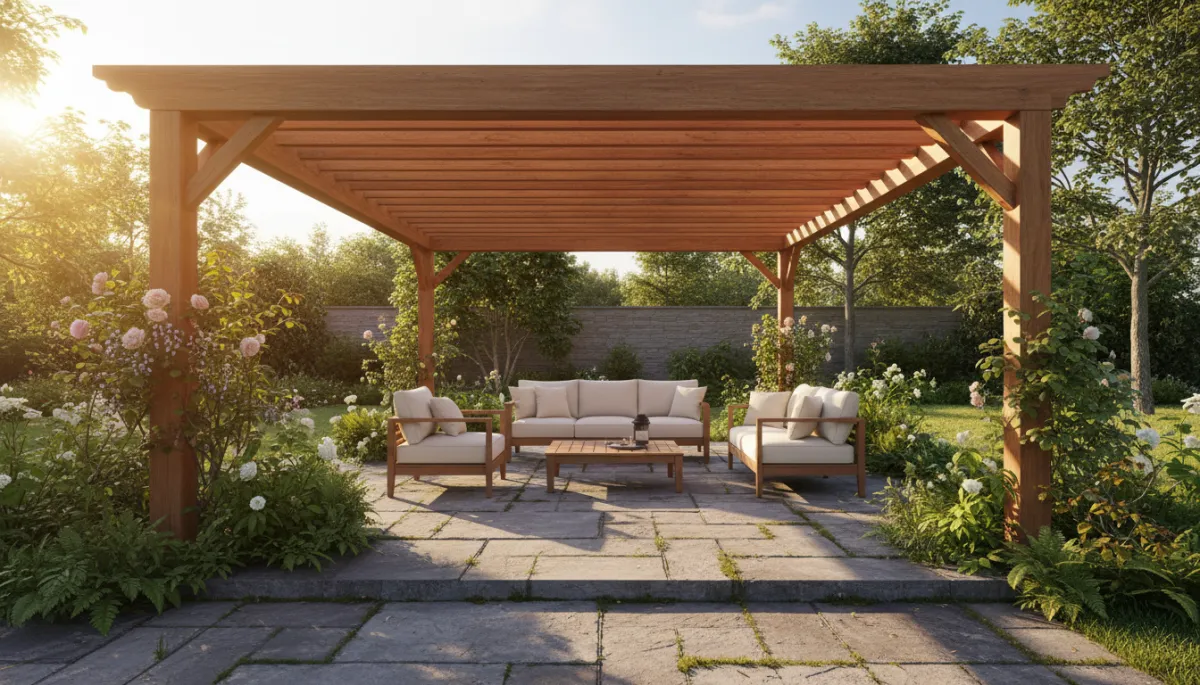
Do I need planning permission for a pergola? Pergola Planning Permission in Ireland Guide
Landscaping, Pergolas, Planning Permission Ireland
TLDR
In Ireland, an open, modestly sized pergola in your back garden is usually treated as exempted development, so you typically do not need planning permission — as long as you stay within the rules on size, height, and location. Go over the limits, add solid walls or a fully solid roof, or attach it to your house, and you may well move into full planning permission territory, so it is always worth double‑checking before you build.
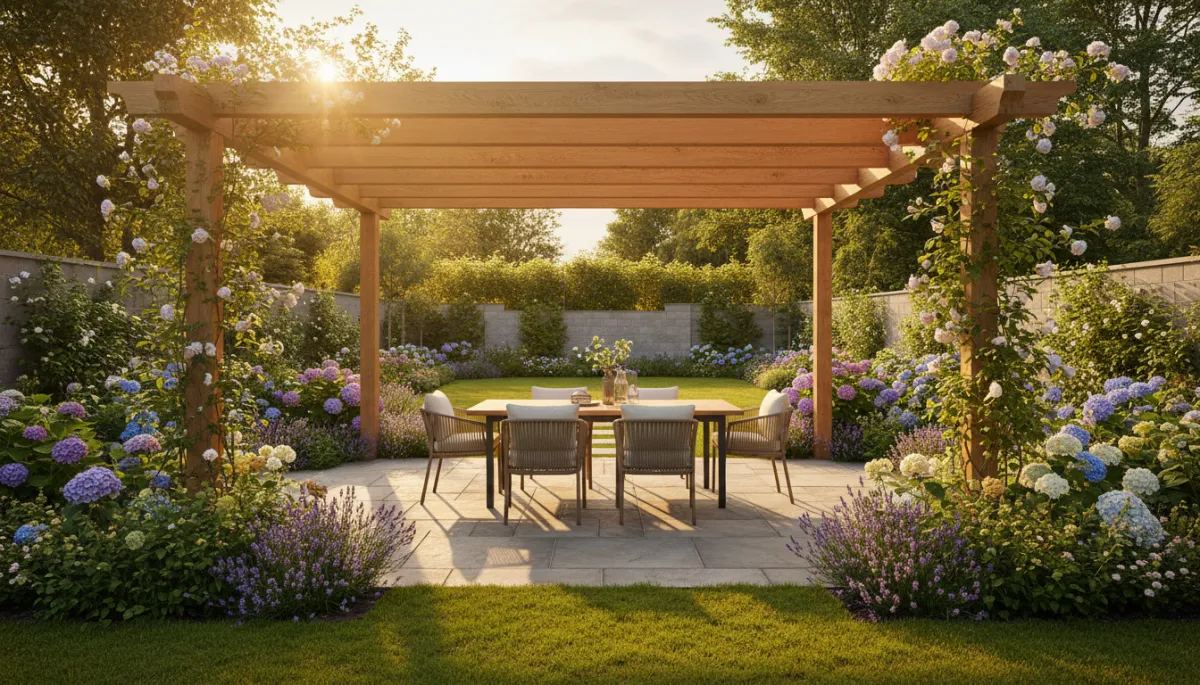
The short answer: usually no, but conditions apply
If you are wondering, “Do I need planning permission for a pergola?” the good news is that, in most Irish back gardens, the answer is no. A typical open timber pergola, used for shade and outdoor dining, will usually qualify as exempted development under the Planning and Development Regulations 2001, so formal planning permission is not required — provided it meets all the exemption rules on size, height, and garden space.
Where people get caught out is when the pergola becomes more like a room — bigger, higher, enclosed, or attached to the house. That is when the planning permission pergola Ireland rules start to bite, and you may need to apply for permission before you build.
What the Irish planning exemption rules say about garden structures
The regulations do not name “pergolas” specifically. Instead, they talk about small domestic buildings in the garden — things like sheds, greenhouses, and similar structures. Under Schedule 2, Part 1, Class 2 of the Planning and Development Regulations 2001, certain non‑habitable garden structures in the rear garden can be built without planning permission if they meet a set of conditions.
An open pergola normally falls into this “ancillary garden structure” category. The key points are that it must be for use with the house, not for living in, and it must respect limits on floor area, height, and the amount of private open space left in your garden. As of mid‑2026, proposals to slightly increase some of these limits (including garden structure sizes) have been announced, but they have not yet been enacted, so the existing rules still apply.
Key thresholds that affect planning for a pergola
When you look at pergola planning rules Ireland wide, there are four big triggers that decide whether your pergola can be exempted development or needs full planning permission:
- Floor area: The total floor area of all exempt garden structures (shed, pergola, etc.) to the rear of the house must usually be 25 m² or less. Go beyond that, and you are outside the standard exemption. This is why measuring carefully before you start is so important for anyone asking, “do I need planning permission for a pergola?”
- Height: The maximum height is generally 3 m for a flat or gently sloped roof, or 4 m for a pitched roof. Many simple timber pergolas come in under these heights without any trouble, but it is easy to creep over the limit if you are adding a raised deck or a more dramatic roofline.
- Private open space: You must keep at least 25 m² of usable garden to the rear of your house after the pergola and any other structures are built. On smaller Dublin plots, this can be the deciding factor, especially if you already have a shed, home office, or large patio.
- Position and boundaries: The structure should sit in the rear garden and not project forward of the front wall of the house. If it runs tight to the boundary, or if you are in a protected structure or Architectural Conservation Area, your local authority may look more closely, and planning permission could be required even if the size is modest.
These are the core thresholds behind most exempt development pergola decisions. Staying safely within them gives you the best chance of avoiding a planning application.
Open pergola vs solid‑roof structure: why it matters
From a design point of view, it might feel like a small step from an open pergola to a covered outdoor room — but in planning terms, it can be a big leap. An open pergola with slatted beams and no solid roof is typically viewed as a lightweight garden feature. It provides shade and structure, but it is still clearly part of the garden, not an extra room of the house. That is why an open pergola planning permission Ireland query often ends with “you are probably exempt,” assuming you meet the size and height rules above.
Once you add a solid roof — for example, a fully sheeted timber roof, polycarbonate, tiles, or a full glass canopy — the structure can start to be treated more like a gazebo, veranda, or garden room. Add sides, glazing, or an outdoor kitchen setup, and it is even more likely to be considered a building rather than just a pergola. In those cases, planning permission is more often required, especially if the structure is large or close to the boundary.
Attaching the pergola to your house: lean‑to considerations
Another common grey area is the lean‑to pergola — a structure fixed to the back wall of the house and projecting out over a patio. The moment your pergola is physically attached to the dwelling, it can be treated more like an extension or covered veranda than a freestanding garden feature. That does not automatically mean you need planning permission, but it does mean the rules are tighter, and the risk of needing permission increases, particularly if the roof is solid or you are close to the neighbours’ windows or boundaries.
If you are dreaming of a lean‑to pergola as part of a wider garden design in Dublin — maybe linking your kitchen to a new dining terrace — it is worth getting proper advice. Integrating the pergola with paving, levels, and planting can make a huge difference, and it also helps ensure the layout respects planning guidelines from the start.
Practical planning tips for Dublin pergolas
Even when a pergola looks clearly exempt on paper, it is still smart to treat it like any other small building project. A few practical steps can save you headaches later:
- Check your measurements twice: Confirm the footprint, height, and remaining garden area. Online tools, such as planning screening calculators, can be handy for quick checks on exempt development pergola scenarios.
- Talk to your local authority if in doubt: A quick conversation with the planning office can clarify how they view pergola planning rules Ireland wide versus any local nuances, especially in conservation areas or estates with strict conditions.
- Consider a Section 5 Declaration: For full certainty, you can apply for a formal decision on whether your specific pergola is exempted development. It takes more time but gives you a written answer before any timber is ordered.
- Keep drawings and records: Even if your pergola is exempt, hold onto basic drawings, dimensions, and photos. They are useful if you ever sell the house or if the council queries works in your garden in the future.
- Think long‑term design: A pergola is often the centrepiece of a wider outdoor living space. Blending it with natural stone paving, considered planting, and subtle lighting can transform how you use your garden, especially in the Dublin climate.
Designing a pergola that works with your garden and the rules
The sweet spot is a pergola that feels generous and welcoming, but still sits comfortably within the exempt development limits. At Peninsula Stone, we often start by looking at how you already use your garden — morning coffee, evening drinks, family gatherings — and then shape the pergola, patio, and planting around those habits. Combining a timber structure with a carefully detailed natural stone terrace and layered planting can make even a compact Dublin garden feel like a private retreat.
If you are planning wider landscape construction works — new steps, raised beds, or a full rethink of your Dublin garden design — it can be the perfect moment to integrate a pergola, rather than bolting one on later. That way, drainage, levels, and sun angles are all considered together, and the finished space feels intentional, not improvised.
Ready to explore a bespoke pergola for your Dublin home?
A well‑designed pergola can anchor your outdoor living space, extend your evenings outside, and add real character to your garden — all while respecting the planning rules. Peninsula Stone designs and builds bespoke garden structures and patios across Dublin, combining natural stone, timber, and planting into cohesive, long‑lasting spaces.
If you would like help navigating planning permission questions for your pergola, or you are ready to chat through ideas for your own garden, you can book a consultation and we will guide you from first sketch to finished structure.


