Landscape Design in North County Dublin: Making the Most of Coastal and Rural Garden Plots
North County Dublin Is a Different Proposition
Most landscape design advice treats Dublin as a single entity. And for central and south-county properties, that's broadly fine: the gardens are similar in size, the soil types are reasonably consistent, and the exposure conditions don't vary enormously from one postcode to the next.
North County Dublin is different. Gardens along the coastal strip from Sutton through Howth and Portmarnock face exposure conditions that require a fundamentally different design approach. Larger rural plots around Donabate, Lusk and the Fingal hinterland come with their own challenges: size, soil variability and boundary treatments that need to work at a scale most Dublin landscapers rarely encounter. And the rapidly developing towns of Swords, Malahide and Rush sit somewhere between the two, combining the ambitions of city-adjacent homeowners with plots that often have considerably more to offer than their suburban equivalents.
Getting landscape design right in North County Dublin starts with understanding which type of garden you're working with.
Coastal Gardens: Howth, Sutton and Portmarnock
The coastal strip of North County Dublin produces some of the most visually striking gardens in the region and some of the most technically demanding to design well. The sea views are exceptional. The wind exposure is relentless.

Gardens facing east or north-east along the Howth peninsula and the Portmarnock shoreline can experience sustained salt-laden winds that damage unprotected planting, corrode metal fittings and accelerate the deterioration of timber structures. The first principle of coastal garden design is shelter: creating it, positioning features within it, and choosing planting that builds it progressively over time.
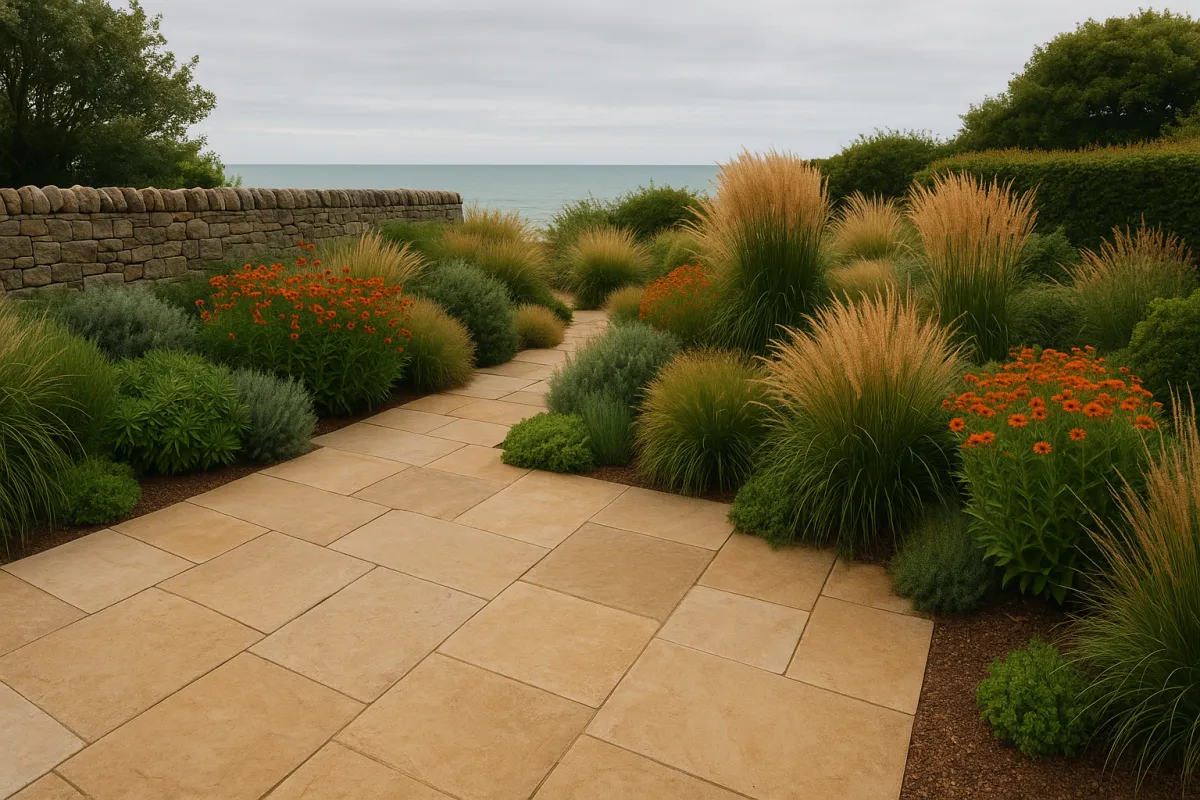
Stone walls are the single most effective shelter structure for coastal gardens in this part of North County Dublin. A well-built dry stone or mortared wall breaks the wind at low level, protects borders and provides a robust backdrop for coastal planting to establish against. Unlike timber fencing, stone has the structural mass needed to actually stop coastal winds rather than flex in them.
For planting, selection needs to account for both exposure and salt spray. Species that perform consistently well in North County coastal conditions include Griselinia littoralis as an evergreen windbreak, Escallonia, Pittosporum and Euonymus japonicus for structure, with Crocosmia, sea thrift (Armeria maritima), ornamental grasses and Agapanthus all capable of thriving in sheltered beds once a windbreak perimeter is established.
In terms of hard landscaping, coastal locations favour natural stone over porcelain for patio surfaces: limestone and granite in particular handle exposed conditions well and develop a weathered character that suits the coastal setting. We've completed some of our most interesting projects in the Howth area, including this coastal garden transformation in Howth and a second significant Howth project with quite different site conditions. The Sutton dream garden is also worth a look for a sense of how exposed North County plots can be handled.
Larger Rural Plots: Donabate, Lusk and the Fingal Hinterland
North of the M1, the character of the land changes. Properties in Donabate, Lusk, Rush and the Balbriggan hinterland often come with plots that would be considered extraordinary elsewhere in the county: south-facing sites of a third of an acre or more, with mature boundary hedgerows and working soil with some actual depth to it.

The soil picture in this part of North County Dublin is more varied than in the coastal strip. Glacial outwash soils in the lower-lying areas near the coast tend to be sandy and free-draining but low in organic matter, meaning planting needs to be properly fed to establish well. Heavier clay-based soils appear as you move inland, retaining moisture well but requiring proper drainage solutions on patio and driveway projects to prevent pooling and surface failure. Understanding the specific soil profile of a site before laying any hard surfaces is something we assess at the design stage, since getting drainage wrong means expensive remediation later.
For larger rural plots, the scale of the design opportunity is genuinely different. A garden of half an acre or more needs structure: defined zones for entertaining and relaxing, clear sight lines from the house, and boundary treatments that frame the space without dominating it. Planting takes on a different role too, with shelter belts, specimen trees and larger perennial drifts all contributing to a garden that works at landscape scale. Artificial grass is worth considering for lawn areas in lower-lying parts of this zone, where the drainage characteristics of some sites make natural turf difficult to maintain in good condition through a wet winter.
Garden Design in Swords and the Mid-North Dublin Corridor
Swords is one of the fastest-growing towns in Ireland, and the gardens that come with its newer housing stock reflect that ambition: well-sized plots, south-facing rear gardens in many cases, and homeowners who want to make proper use of the space available.

Garden design in Swords tends to centre on creating distinct spaces within a medium-sized plot: a patio for dining, a deck for sun catching, a pergola for shelter and year-round use, and a lawn that works for both family life and visual appeal. Driveways are increasingly part of the conversation too, with natural stone and block paving driveways replacing tired tarmac across a lot of the town's older housing stock.
The mid-North corridor, taking in Kinsealy and the broader Swords environs, also includes a number of larger detached properties with the kind of gardens that genuinely benefit from a full landscape design and build process rather than a piecemeal approach.
Landscape Design in Malahide: Character and Quality
Malahide sits at the premium end of North County Dublin's garden design market. The mix of period red-brick properties on generous Victorian-era plots and more recent executive builds both produce interesting design briefs, with a consistent expectation of quality in materials and execution.
Landscape design projects in Malahide frequently involve working within the constraints of established planting: mature trees and hedgerows that define the garden's character but also shade it and compete for nutrients with new planting. The most consistent theme across Malahide projects is the expectation of a garden that functions as an outdoor room: structured, sheltered, well-lit with integrated garden lighting, and able to accommodate entertaining throughout the season. Bespoke seating and a pergola are almost always part of the brief.
Hard Landscaping in North County: What Works and Why
Across all of North County Dublin, a few design principles hold regardless of whether the garden is coastal, rural or suburban:
- Natural stone over porcelain on exposed sites, for grip, thermal performance and long-term durability
- Stone walls as the most effective windbreak option for coastal and exposed rural plots
- Pressure-treated or hardwood timber for any fencing on North County sites, where exposed conditions accelerate deterioration of standard timber
- Drainage design from the outset, particularly on clay-based or lower-lying sites around Donabate, Lusk and north Swords
- Pergola structures specified for exposed conditions, not just standard suburban wind loading, for any site along the coastal strip or on open rural land
Working With Our Team Across North County Dublin
We've worked across North County Dublin for years, from coastal gardens in Howth and Portmarnock to rural plots in Donabate and suburban gardens in Swords and Malahide. We understand the specific conditions and constraints that come with the territory, and we bring that knowledge to every project.
If you're planning a garden project in North County Dublin this year, book a consultation with our team and we'll carry out a site assessment that takes account of your actual conditions: soil type, aspect, wind exposure and everything else that makes your garden specific. Generic landscape design advice doesn't serve North County Dublin well. The right design starts with understanding the particular site.


